
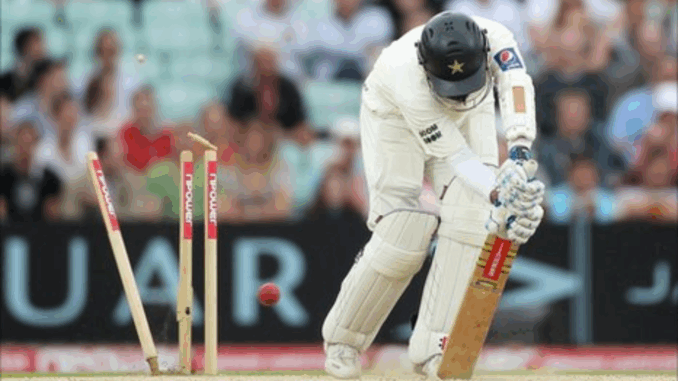
Cricket is a sport full of fascinating moments, from stunning catches to incredible bowling feats. One of the rarest and most thrilling moments for a bowler is the hat-trick—but have you ever heard of a double hat-trick?
Cricket fans often debate: What is a double hat-trick? Is it even an official term? And most importantly: How many wickets are required for a double hat-trick?
Let’s dive into the world of cricket terminology, explore this rare feat, and uncover some exciting moments when bowlers came close to—or achieved—a double hat-trick.
What is a Hat-Trick in Cricket?
Before we get to double hat-tricks, let’s start with the basics.
A hat-trick in cricket occurs when a bowler dismisses three batsmen in three consecutive deliveries. These balls must be bowled by the same bowler, and across different overs or even innings (in Tests), as long as they are consecutive deliveries by that bowler.
Key Rules of a Hat-Trick:
- It must be three wickets in a row.
- The dismissals can span overs or even innings (in multi-day formats).
- Wides and no-balls do not count as valid deliveries.
Hat-tricks are celebrated globally, and they’re fairly rare—even the most elite bowlers might go their entire careers without taking one.
What is a Double Hat-Trick?
Now, here’s where things get interesting.
A double hat-trick is not an officially recognized term in cricket laws, but it is commonly used by fans and commentators to refer to an even rarer achievement:
Taking four wickets in four consecutive deliveries.
Some people interpret “double hat-trick” literally—two hat-tricks back-to-back, i.e., six wickets in six balls—but that’s extremely rare and virtually unheard of at professional levels.
For most practical purposes, and in common usage, a double hat-trick refers to four wickets in four balls.
How Many Wickets Make a Double Hat-Trick?
To answer the main question:
A double hat-trick typically refers to 4 wickets taken in 4 consecutive deliveries.
Let’s break this down:
| Term | Wickets | Balls |
|---|---|---|
| Hat-trick | 3 | 3 consecutive |
| Double hat-trick | 4 | 4 consecutive |
| Triple hat-trick* | 6 | 6 consecutive (extremely rare) |
So, the commonly accepted definition involves 4 wickets in 4 balls, although there’s no official ICC term called “double hat-trick” in the rulebook.
Is Double Hat-Trick an Official Term in Cricket?
The short answer: No, the term “double hat-trick” is not officially recognized by cricket’s governing bodies like the ICC (International Cricket Council).
Instead, the correct technical term is “four wickets in four balls.” However, the phrase double hat-trick is often used informally by:
- Broadcasters
- Fans
- Cricket writers
- Even players themselves
So while it’s not an official term, it’s widely understood in cricketing circles—similar to how we say “king pair” when a batter gets out for a duck in both innings of a Test match.
Notable Double Hat-Trick Moments in Cricket
Despite being rare, several players have achieved the incredible feat of four wickets in four balls. Let’s look at a few iconic instances:
Lasith Malinga (Sri Lanka) – World Cup 2007
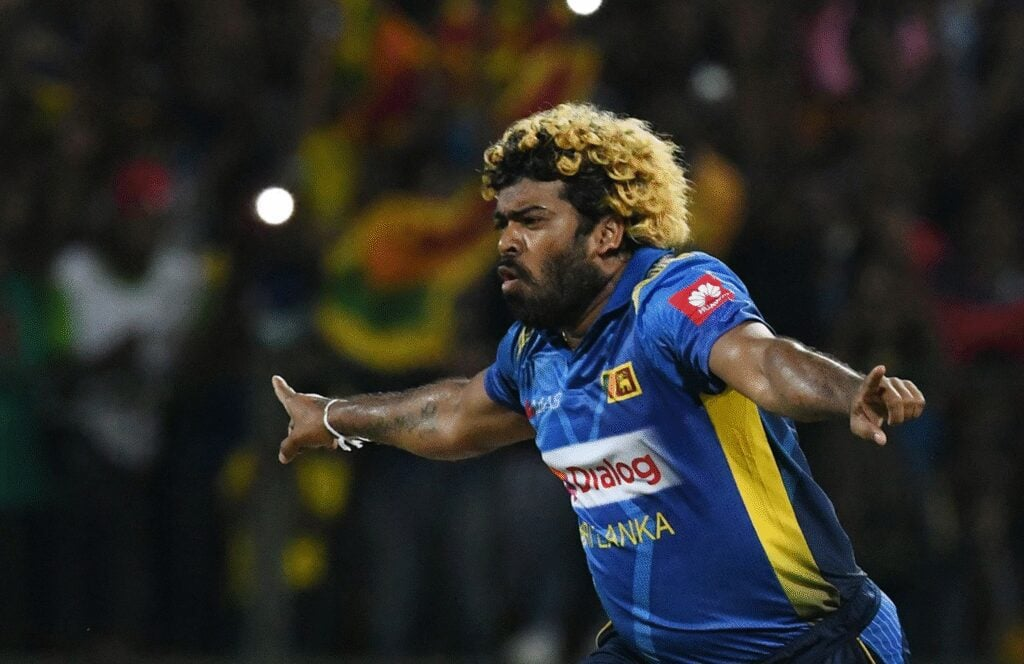
Arguably the most famous double hat-trick in cricket history, Lasith Malinga stunned South Africa by taking 4 wickets in 4 balls during a dramatic spell in the 2007 Cricket World Cup.
Victims: Shaun Pollock, Andrew Hall, Jacques Kallis, and Makhaya Ntini.
Rashid Khan (Afghanistan) – T20I vs Ireland, 2019
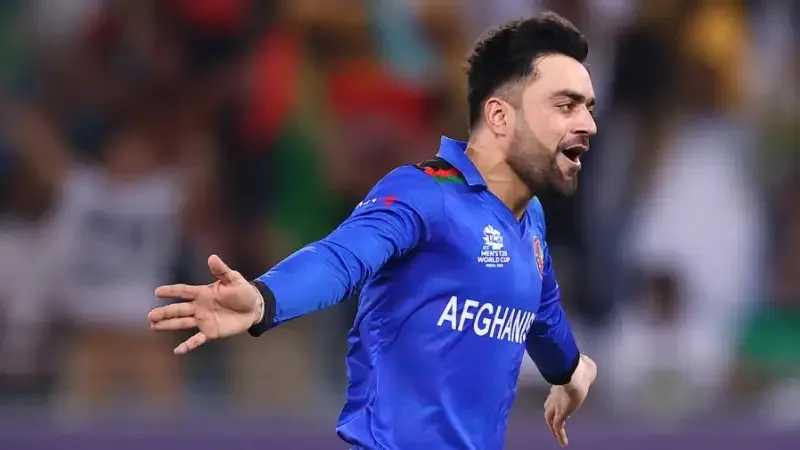
Rashid became the first player to take a T20I double hat-trick, grabbing 4 wickets in 4 balls. This was historic not just for Afghanistan, but for global T20 cricket.
Curtis Campher (Ireland) – T20 World Cup 2021

Campher shocked the Netherlands with four wickets in four balls, becoming only the third player in T20I history to achieve this.
Merv Hughes (Australia) – Test cricket
While not 4 wickets in 4 balls in the same over, Hughes took a hat-trick across two innings and then a wicket with his next ball—technically 4 wickets in 4 balls.
Hat-Trick vs Double Hat-Trick: What’s the Difference?
| Feature | Hat-Trick | Double Hat-Trick |
|---|---|---|
| Wickets Taken | 3 | 4 |
| Deliveries | 3 consecutive balls | 4 consecutive balls |
| Frequency | Rare | Extremely rare |
| Official Term | Yes | No |
While both are rare bowling feats, a double hat-trick is much harder to achieve due to the level of precision and pressure required over four balls.
Fun Facts and FAQs
Has anyone taken 6 wickets in 6 balls?
There are no known international instances of six wickets in six balls (a “triple hat-trick”), though there have been cases in junior and domestic cricket.
Can a bowler take a hat-trick across two innings?
Yes. As long as the bowler bowls three consecutive deliveries (even across innings or days), it counts as a hat-trick.
What are some other rare bowling feats?
- Five wickets in an over
- All 10 wickets in an innings (e.g., Jim Laker, Anil Kumble, Ajaz Patel)
- Hat-trick on debut
- Wicket on the first ball of a match
Final Thought
So, how many wickets constitute a double hat-trick? While the term is unofficial, the answer is widely accepted: 4 wickets in 4 consecutive balls.
Double hat-tricks might not make it to the official rulebooks, but they live in the hearts of cricket fans as one of the most thrilling sights on the field. Whether you’re a stats geek or a casual viewer, there’s no denying the adrenaline rush when a bowler starts racking up consecutive wickets.
Next time you’re watching a match and a bowler’s on a roll—keep count. You just might witness history in the making.
