
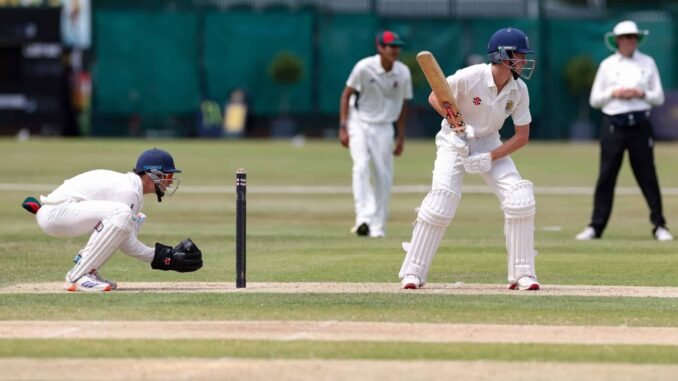
Most bettors end up with a scattered set of accounts and a scattered set of ideas. Treating Stake as a single, deliberate home for your cricket betting forces a different question: if everything has to live under one roof, how do Tests, ODIs, and T20s fit together without tripping over each other?
Why a “Stake‑only” cricket plan feels different
Using Stake as your main cricket base is not just about convenience. It is about coherence. One balance, one history of bets, one set of habits. Instead of thinking in terms of “this match here, that league there,” you start to think in terms of seasons and portfolios.
That shift matters. It stops Test positions, ODI series bets, and T20 punts from fighting for the same money blindly. Instead, each format is given a defined role: some markets are there to grind steady edges over time, others to accept short‑term volatility where your knowledge runs deepest. The Stake account becomes a cricket diary as much as a wallet.
Giving each format a clear job inside Stake
The simplest way to build a Stake‑only portfolio is to decide what each format is actually for.
- Tests become your long‑form, lower‑volume pillar. Here, you might use Stake for series outcomes, match handicaps, and carefully chosen draw or declaration angles, sized modestly but with longer holding periods.
- ODIs occupy the middle band: enough time for skill and tactics to matter, but still shaped by white‑ball rhythms. Stake’s markets on first‑innings runs, series scorelines, and top tournament performers fit naturally here.
- T20s are your high‑frequency, lower-stake engine. You use Stake’s breadth of match odds, totals, and player props to turn small, format‑specific edges into a steady hum of opportunities across a league or calendar.
This does not mean you must bet every format equally. It means that when you do get involved, you know why that bet belongs in your Stake portfolio.
Ring‑fencing bankroll slices by format
Once each format has a role, the next step is carving the Stake bankroll accordingly. Instead of one undifferentiated pot, you can mentally split it into three lanes.
For example, you might decide that:
- 40 percent of the Stake balance is available for T20 leagues and franchise tournaments, where you watch most games.
- 35 percent is dedicated to international cricket, split between Tests and ODIs depending on the calendar.
- 25 percent is held back for series outrights, World Cups, and occasional “big picture” futures.
These numbers can change with the season, but the principle remains: Tests do not cannibalise T20 funds on a whim, and vice versa. Each lane has its own maximum exposure at any one time.
Rotating focus with the cricket calendar
A Stake‑only portfolio works best when it flows with the schedule. There will be months where T20 dominates and others where Test series demand attention. Instead of fighting that, you lean into it.
During a heavy T20 block, your Stake account might be:
- Running many small positions across an IPL or Big Bash, backed by detailed notes on venues and roles.
- Holding a couple of tournament futures seeded with any Stake promotion you activated earlier in the year.
When the calendar swings to red‑ball cricket, the same account gradually shifts:
- T20 exposure is trimmed or paused.
- Stakes are reallocated to series handicaps, first‑innings runs, and carefully timed draw bets in Tests.
At each turn, you are moving slices of Stake balance between lanes, not randomly stacking more and more positions on top of each other.
Using Stake’s markets to diversify within formats
Even inside one format, Stake’s range allows you to spread risk. Take T20s as an example. Instead of staking everything on match odds, a Stake‑only plan might combine:
- Small positions on match winners where your read on conditions and bowling attacks is clear.
- Runs‑band or par‑score bets on grounds you know intimately.
- Top batter or top bowler markets for players whose role and matchup you follow closely.
The same logic applies to Tests and ODIs: mixing match outcome markets with series bets, totals and player performances. The goal is for your Stake ledger to show a healthy mix of independent edges, not a long line of near‑identical bets all vulnerable to the same kind of bad luck.
Keeping formats from infecting each other’s mindset
One quiet risk of having everything under one Stake login is psychological bleed. A bad run on a chaotic T20 league can make you gun‑shy when a perfectly good Test opportunity appears the next week. A big Test win can tempt you into over‑staking on the next flashy T20 double‑header.
To avoid that, you can set a few simple rules:
- Loss limits and cool‑off periods are format‑specific. A rough T20 week does not prohibit you from taking a carefully priced Test position if your overall bankroll rules are intact.
- Win streaks in one format do not justify increasing unit size in another. Your T20 confidence has no bearing on how good your next ODI bet really is.
- Reviews of performance are split by format: once a month, you look at Stake’s Test record, ODI record, and T20 record separately, rather than judging everything in one emotional lump.
Folding Stake promotions into this portfolio, rather than chasing them
Promotions, whether from a dedicated promo page or Stake’s own offers, should be absorbed into this structure rather than sitting above it. A simple approach is:
- When you activate a new Stake bonus, decide which lane it will strengthen. Perhaps an upcoming T20 league, or a World Cup futures project.
- Do not let the existence of a promo drag you into formats or markets you barely follow. If you live and breathe T20 and barely watch Tests, pushing the bonus into long‑form declaration bets just to “try something” usually backfires.
- Treat any bonus‑funded bets as part of the same record‑keeping as your cash bets, so that outcome and process are judged together.
Reviewing Stake as if it were a team sheet
At intervals, it helps to step back and treat your Stake portfolio like a selector treats a squad list. Which formats are pulling their weight? Which markets consistently cost money? Are you over‑reliant on one competition?
This might lead you to decisions such as:
- Dropping or shrinking exposure to a particular league where your Stake results show that you misread conditions too often.
- Promoting Tests or ODIs to a bigger share of the bankroll if they have provided steadier, more predictable edges.
- Rotating out a type of bet (for example, elaborate T20 multis) that keeps underperforming, even if they are fun to place.
The point is not to chase perfection. It is to ensure that, if Stake is the clubhouse where all your cricket betting lives, every part of that operation is earning its spot.
Letting one account tell you who you really are as a cricket bettor
Perhaps the biggest hidden benefit of a Stake‑only cricket plan is self‑knowledge. When every Test hunch, ODI angle, and T20 instinct passes through the same interface and the same balance, patterns become impossible to ignore.
You will see, very clearly:
- Which formats truly match your temperament?
- Whether you are better at reading series arcs or single matches.
- How often do you stick to your own unit rules under pressure?
Over time, Stake stops being just a place where you place bets. It becomes a mirror that reflects the kind of cricket bettor you actually are, not the one you imagine yourself to be. Once you have that picture, every future decision about formats, markets, and staking gets a little sharper.
