
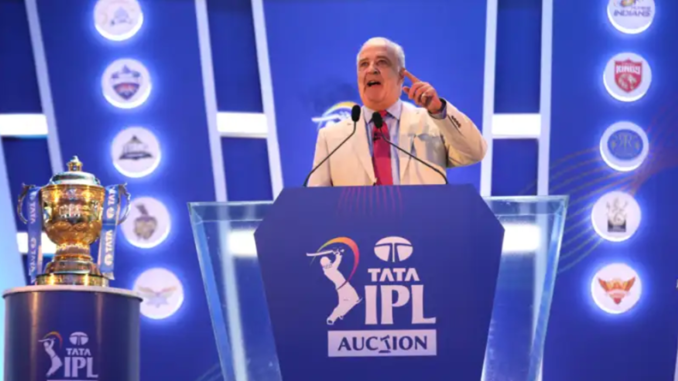
Every IPL auction throws up the same reaction: “Why did they pay THAT much for him”?
Most fans assume teams have panicked, maybe they got emotional, or have no idea what they are doing.
But, cricket experts and teams know that the reality is more interesting. There is strategy, psychology, and complex economics behind every bid.
In fact, many overpaying is deliberate, some underbidding is tactical, and some genuinely miscalculate.
Confused? Well, this IPL auction strategy explained guide will tell you exactly what goes on behind the scenes of the overpaying, underbidding, and mistakes in the IPL. In turn, by the end, every future action will make a lot more sense to you.
How the IPL Auction Actually Works? (Basics covered)
| Element | Details |
| Salary Cap (2026) | Rs. 151 crore per team |
| Auction Phase | Rs. 120 crore (after retentions deducted) |
| Base Price | Set by the player, ranges between Rs. 20 lakh to Rs. 2 crore |
| Bidding Style | English auction, open, ascending bids, highest wins |
| Overseas Slots | Maximum 4 in playing XI (scarcity drives prices up) |
All these costs come under the total cap of Rs. 151 crore allotted to each team. In this way, every penny spent on one player cannot be spent on anyone else. For example, every player gets Rs. 7.5 lakh match fee (including the Impact player), which is mandatory. This takes the total to Rs. 1.05 crore per player (for 14 matches), which also comes under the total cap with auction and performance fees. Still, paying a high amount for one player in the auction prevents spending on other important players.
Knowing the auction budget and player valuation also gives fantasy cricket enthusiasts a better perspective on team selection. If you are trying your own team-building skills on fantasy cricket platforms, check Deals Shutter promo codes for major fantasy cricket apps.
Why do Teams Overpay? (The Real Reason)
#1. The Winner’s Curse
There is a common observation that a team that wins at the open auction is often the one that overestimated a player’s value the most. For example, Venkatesh Iyer played well for the Kolkata Knight Riders in 2024. In turn, the team fiercely bid to get him in IPL 2025 against RCB and won. But, they paid a massive Rs. 23.75 crore for him. Eventually, he had an underwhelming performance, which led them to release him.
#2. Scarcity Bidding
When teams feel a scarcity of a particular skill, they bid fiercely for it. Especially in mini-auctions held every year. For example, if only two quality death bowlers are available in an entire auction, every team will try to bid their maximum. It increases their prices irrespective of their form. So, sometimes it is more about the scarcity of something than player performances.
#3. Tyre Kicking (Deliberately inflating rival prices)
Sometimes IPL teams bid on players they don’t want. Yes, but it is not a mistake or confusion. Instead, they just want to decrease their rival’s budget to buy other players. For instance, if the Mumbai Indians want a specific batter and the Chennai Super Kings know about it, CSK might intentionally bid for that player to increase its price, and then leave. So, although MI will win the player, it will pay an extra price than required.
#4. Recency Bias
More often than not, a player who just had a great World Cup or IPL season gets picked based on their peak form and not their regular value. For instance, Sunrises Hyderabad bought 23-year-old Harry Brooks for Rs. 13.25 crore following an intense bidding war due to his exceptional performance in the 2022 World Cup.
#5. Brand Value vs. Playing Value
Occasionally, some players are bought for what they do off the field to increase jersey sales, ticket sales, and social media growth rather than their performances. These popular stars help to fill seats, and commercial value is prioritised in the bid.
Why Teams Underbid? (Equally Deliberate)
#1. Budget Disciple (The Silent Strategy)
Many IPL franchises like CSK, MI, and Rajasthan Royals often use a silent IPL bidding war strategy. According to this, they have a pre-decided maximum price for every player, and they walk away the moment any bidding goes beyond it.
#2. Skill Abundance
Many good overseas batters go unsold at every auction. It is not because they are bad, but because there are already a lot of batting skills in teams, and they do not want to use their limited overseas slot for it. In this way, players in crowded categories often get underbid, which has nothing to do with their talent,
#3. Bid Sharing
Smart teams often start their bidding from a lower amount due to the risk of overestimating a player’s value. For instance, if RCB’s IPL player valuation strategy says that someone’s overall worth is Rs. 20 crore, they will still start bidding from Rs. 16 or 17 crore to not get overconfident about it.
#4. The Rajasthan Royals 2008 Blueprint
Rajasthan Royals had the lowest salary expenses of any other team in 2008, yet they won the title due to under-valued talent and creative contracts. In fact, their man of the tournament, Shane Watson, was not even bought in the main auction. He was later signed for a mere USD 125000. Meanwhile, captain Shane Warne was signed on a modest contract, too. But he negotiated 0.75% ownership stake in the franchise per season played.
The Numbers Behind the Decision
| Situation | What Teams Do | Why |
| Only one quality finisher is available | Bid aggressively past the value at the top | Scarcity (no option) |
| Rival has Rs. 40 crore left and wants a player | Tyre kick to drain their budget | Tactical disruption |
| The player just had a record-breaking IPL season | Bid cautiously above market | Recency bias correction |
| Uncapped domestic player, unknown quantity | Low base bias | Information asymmetry |
| Player fits the team’s specific system perfectly | Private value- bid higher than rivals | Fit premium |
These situations explain how the same player can be worth different amounts to different teams based on their squad gaps, remaining budget, and overall strategy. It means there is no single “right” price.
The Most Famous Overpays and Steals in IPL History
Overpays that had hurt:
- Yuvraj Singh- He was bought for a record price of Rs. 14 and Rs. 16 crore back-to-back in IPL 2014 and 2015. But both times, he fell below expectations.
- Rishabh Pant- Lucknow Super Giants bought him for a massive Rs. 27 crore in IPL 2025 and 2026 as captain, but both times he failed to impress with his batting or captaincy.
- Ben Stokes- CSK bought Ben Stokes for Rs. 16.25 crore, but he managed to win only 2 matches and scored 15 runs. He missed out the rest of the season due to injury.
Steals that won titles:
- Shane Watson- RR picked him in 2008 for Rs. 125,000, and he won Man of the Tournament.
- Varun Chakravarthy- KKR picked an uncapped and underpriced Varun who has ended up becoming one of the top-ranked T20I bowlers.
- Rinku Singh- He was picked up for a fraction of the price but ended up becoming one of IPL’s most devastating finishers.
It concludes that the best auction teams do not win by spending the most. Instead, they win by knowing which prices are real and which are just noise.
What Makes a Player Worth More Than Their Price?
Five things a smart team looks for in an IPL auction:
#1. Role Scarcity- To know if any other player has the same abilities and can deliver the same performance.
#2. System Fit- Selecting players who make those playing around them better.
#3. Pitch and Venue Alignment- Clarity on whether a player’s skillset aligns with the team’s home ground
#4. Player pressure track record- Analysis of a player’s regular-season performance vs knockout game performance.
#5. Injury and availability history- A mostly unavailable player is worth zero.
This same auction logic applies to Fantasy cricket, too. When you are building your fantasy IPL team, you are essentially running your own mini-auction. You can check for Dream 11 coupon codes before joining any expensive paid concert.
Summing up
In the end, this IPL auction strategy explained guide will help next time when someone looks expensive at the IPL auction. You will automatically know if any of these reasons apply to them. It is not always bad to overpay, and sometimes it is the price of scarcity, or a deliberate tactical drain on a rival’s budget. Meanwhile, underbidding is not a vulnerability. Sometimes it is the smartest thing a team can do. In fact, these IPL auctions are not just cricket; they are like a chess game for franchises with crores on the table.
